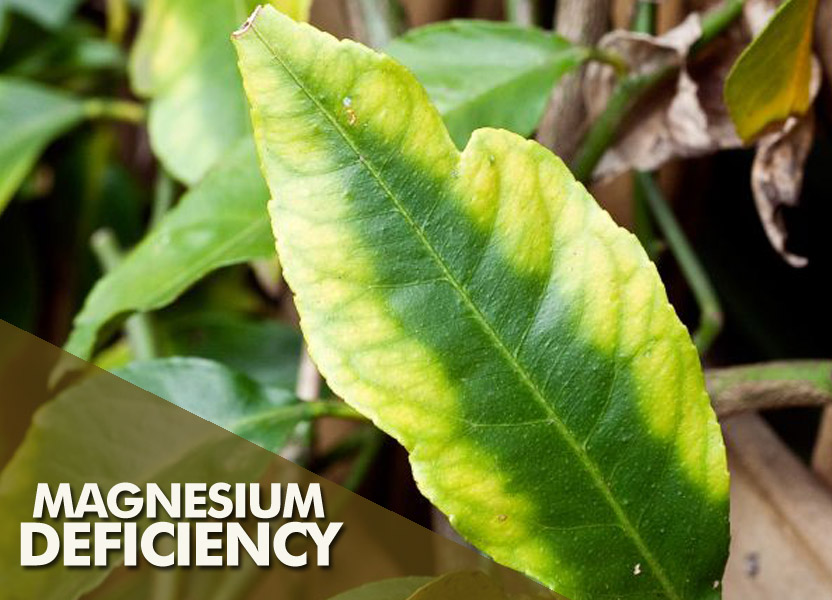


Magnesium Deficiency in Plants
This causes the main symptom of magnesium deficiency, interveinal chlorosis, or yellowing between leaf veins, which stay green, giving the leaves a marbled appearance.
After prolonged magnesium deficiency, necrosis and dropping of older leaves occurs. Plants deficient in magnesium also produce smaller, woodier fruits.
One of the first signs of magnesium deficiency is chlorosis. Chlorosis is the yellowing of the leaf structure found between veins, giving the leaf a marbled appearance, while the veins remain green. Another indication of chlorosis is for the leaf margins to turn a red-brown-purple colour.
Magnesium is mobile in plants and when a deficiency occurs, chlorophyll in the older leaves is broken down and transported to the new plant growth. This is why chlorosis symptoms manifest in the older leaves first.
If the deficiency is not corrected, the chlorosis will eventually manifest in the new growth. The continued deficiency of magnesium results in leaf necrosis and the dropping of the older leaves will occur. Magnesium is also an activator for various enzymes and a deficiency will lead to a decrease in enzyme activity which will also affect plant growth. Magnesium stabilizes the ribosome structures and the breakdown of these structures leads to premature ageing of the plant.